

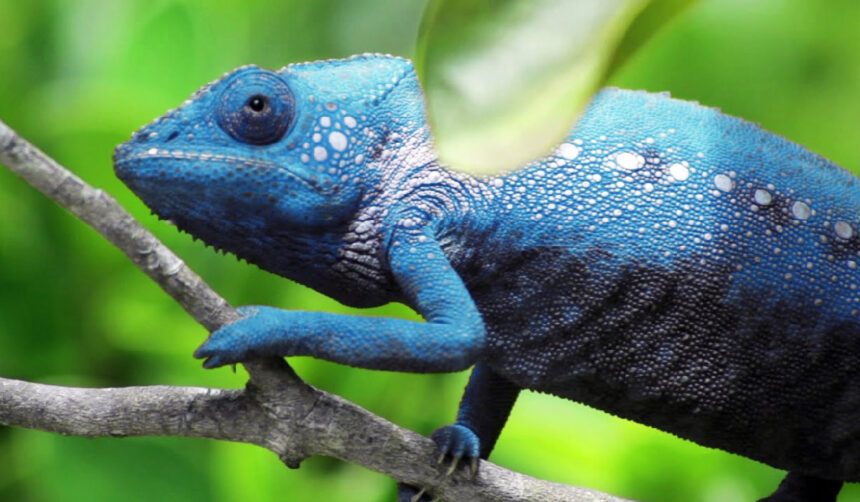
What Is Chameleónovité?
Chameleónovité refers to the family Chamaeleonidae, a distinct group of reptiles commonly known as chameleons. These fascinating creatures are best recognized for their color-changing ability, but that is just one feature among many that make them unique. The term “Chameleónovité” is often used in Slovak and scientific contexts to describe this family, which includes over 200 known species. Most species are found in the Old World—particularly in Africa and Madagascar—but some also inhabit parts of Asia and Southern Europe.
Chameleónovité are members of the lizard order Squamata, yet they differ significantly from other lizards in terms of anatomy, behavior, and ecology. Their specialized eyes, prehensile tails, tree-climbing feet, and projectile tongues set them apart. Whether admired in the wild or kept in captivity, these animals continue to inspire awe and curiosity, making them a subject of scientific research, conservation interest, and public fascination.
Scientific Classification and Origins
Chameleónovité are classified within the animal kingdom as follows: Kingdom Animalia, Phylum Chordata, Class Reptilia, Order Squamata, and Family Chamaeleonidae. Their evolutionary roots stretch back millions of years, likely diverging from other lizards in the late Cretaceous period. Today, they are primarily distributed in Madagascar, which boasts the greatest species richness, followed by continental Africa.
A few species exist in Asia, the Arabian Peninsula, and even parts of southern Europe like Spain and Portugal. Despite this widespread distribution, most chameleons are habitat-specific and sensitive to environmental change. The isolation of Madagascar allowed unique forms like Furcifer and Calumma to evolve, showcasing adaptive radiation at its finest. Their scientific importance lies not only in their bizarre traits but also in what they reveal about evolution, adaptation, and biodiversity.
Why Chameleónovité Are Unlike Other Lizards
Unlike most reptiles, chameleónovité have several anatomical and behavioral traits that make them uniquely adapted to arboreal life. Their feet are zygodactylous, meaning the toes are grouped into two opposable sets—like tongs—perfect for gripping branches. Additionally, their tails are prehensile, acting as a fifth limb that supports balance and mobility among trees. Their eyes are mounted in turret-like sockets and can move independently, providing a 360° field of view—something rarely seen in the animal kingdom.
Unlike the scurrying behavior of most lizards, chameleons move slowly and cautiously, often rocking side-to-side to mimic the motion of leaves in the wind. This slow-motion strategy aids in camouflage and predation. Their entire body—from skin to skeleton—is engineered for stealth, stability, and surprise, allowing them to function effectively as ambush predators.
The Marvel of Color Change in Chameleónovité
One of the most iconic features of chameleónovité is their ability to change color. Contrary to the common myth that they do so only for camouflage, the primary reasons are communication and thermoregulation. Chameleons have specialized skin cells called chromatophores and iridophores. Chromatophores contain pigments (black, red, yellow), while iridophores are filled with nanocrystals that reflect light.
By altering the spacing of these nanocrystals, chameleons can shift their skin color from calming greens and browns to bright reds and yellows. These color shifts happen in seconds and reflect a range of emotions—dominance, courtship, aggression, or stress. Darker tones often signify stress or temperature regulation, while vibrant hues indicate alertness or readiness to mate. This sophisticated biological mechanism functions like a mood ring, displaying visual messages to nearby observers and rivals.
Chameleónovité and Their Remarkable Eyes
Among vertebrates, the eyes of chameleónovité are in a league of their own. Each eye can rotate and focus independently, giving them panoramic vision. When needed—such as during hunting—both eyes converge to form binocular vision for precise depth perception. This ability is vital for their projectile feeding method. Their eyes are also known to perceive ultraviolet light, granting them vision beyond the capacity of humans. Studies have shown that UV sensitivity may play a role in social interactions and prey detection. The combination of near-complete peripheral vision, depth accuracy, and UV perception makes their eyes powerful tools for survival. These visual adaptations reflect their need to stay aware of predators while targeting fast-moving insects.
Their Tongue: A Biological Masterpiece
Perhaps one of the most impressive weapons in the animal world is the tongue of a chameleon. Chameleónovité possess a ballistic tongue that can launch with incredible speed and accuracy, reaching prey at distances exceeding the length of their body. The tongue is powered by highly elastic tissues and specialized muscles, allowing it to accelerate faster than a fighter jet (in terms of G-force). At the tip of the tongue is a sticky pad, which grips the prey—usually insects—and reels it back to the chameleon’s mouth in milliseconds. Some larger species may even capture birds or small reptiles. This feeding technique enables them to hunt while remaining stationary, an energy-efficient strategy in the wild.
Feet and Tail: Built for the Trees
Chameleónovité are expert climbers, and their limbs are built specifically for navigating branches. Their feet are split into two opposable groups, allowing them to clamp around narrow twigs with precision. This zygodactyl structure is found on both front and hind limbs. Furthermore, their tail is prehensile and muscular, functioning as an additional anchor point when climbing. These features are essential for maintaining balance in complex three-dimensional environments. Even young chameleons are born with these adaptations, showing how deeply these traits are embedded in their evolutionary design. These characteristics ensure that chameleons can move with stealth and grace, even in dense foliage or uneven terrain.
Where Chameleónovité Live
The natural range of chameleónovité spans several continents, but their stronghold is clearly Madagascar, home to over 50% of known species. The island’s isolation and diverse habitats—from rainforests to dry spiny forests—have allowed chameleons to evolve into a variety of forms and sizes. Outside Madagascar, species can be found throughout sub-Saharan Africa, parts of India and Sri Lanka, and even in parts of southern Europe. In Arabia and the Middle East, arid-adapted species have developed to thrive in dry conditions. While some chameleons prefer humid, densely vegetated forests, others are perfectly comfortable in savannas, deserts, or agricultural landscapes. This adaptability has helped certain species expand their ranges, though it also exposes them to more human-driven threats.
Ecosystems and Microhabitats
Within each region, chameleónovité occupy specific niches based on elevation, humidity, vegetation, and temperature. Some species are strictly arboreal, never touching the ground, while others are terrestrial, living among rocks and low shrubs. For instance, Brookesia species—often referred to as “leaf chameleons”—live near the forest floor and rely on camouflage among fallen leaves. In contrast, tree-dwellers like Furcifer pardalis (panther chameleon) prefer higher perches in the forest canopy. This specialization makes them highly susceptible to habitat change, as even small alterations can render an area uninhabitable.
Behavioral Patterns and Hunting
Chameleónovité are solitary and territorial, often using visual signals to warn others to stay away. They rely on their excellent vision to spot prey and predators, and their slow, stealthy movements help them blend into their surroundings. When hunting, a chameleon will approach its target slowly and then fire its tongue in a lightning-fast strike. It’s a sit-and-wait strategy that relies on patience and accuracy. Territorial disputes, especially among males, may involve color displays, body inflation, and even combat if visual warnings are ignored.
Reproduction and Life Cycle
Chameleons follow oviparous reproduction, meaning they lay eggs. Males often display brilliant colors and perform ritualistic movements to attract females. If the female is receptive, mating occurs, followed by egg-laying after a gestation period. Clutch size varies widely—from a few eggs to over 50, depending on the species. Eggs are laid in soil or leaf litter and left to incubate without parental care. Once hatched, young chameleons are fully independent and must fend for themselves. Some species exhibit live birth, particularly those living in cooler or more mountainous habitats, such as Trioceros species from East Africa.
Conservation Concerns
Unfortunately, many chameleónovité species are now under threat. Deforestation, land conversion, climate change, and illegal collection for the exotic pet trade have pushed several species toward endangerment. The International Union for Conservation of Nature (IUCN) lists many species—such as Calumma tarzan and Furcifer belalandaensis—as critically endangered. Climate models predict further habitat fragmentation due to shifting rainfall and temperature zones, especially in Madagascar. Conservationists are focusing on habitat protection, breeding programs, and education to mitigate these threats. However, success depends on international cooperation and local community involvement.
Chameleónovité in Captivity
Chameleons are popular in the exotic pet trade, especially species like the Veiled chameleon (Chamaeleo calyptratus), Panther chameleon (Furcifer pardalis), and Jackson’s chameleon (Trioceros jacksonii). However, they are not beginner pets. They require strict temperature gradients, UVB lighting, high humidity, and vertical enclosures with live plants. Feeding them involves live insects dusted with calcium and vitamins. Improper care often leads to metabolic bone disease, dehydration, and early death. Ethical ownership means avoiding wild-caught specimens, ensuring proper habitat setup, and staying informed through reputable sources.
What Scientists Are Learning from Chameleónovité
Research into chameleónovité is yielding fascinating insights, especially in the fields of biomimicry and material science. The nanocrystal color-change mechanism is inspiring innovations in adaptive fabrics, camouflage clothing, and responsive surfaces. In biology, their evolutionary pathways help scientists understand speciation, sexual selection, and habitat specialization. Their visual and locomotor systems are also models for robotics and prosthetics research, showing how nature’s engineering can influence human technology.
Cultural and Educational Value
Chameleons have become symbols of change, flexibility, and adaptability. They appear in folklore, children’s books, and even corporate branding. Their captivating traits make them popular in documentaries and wildlife education programs, where they serve as ambassadors for reptile diversity and conservation. Platforms like YouTube and educational apps often feature chameleons to teach biology, evolution, and environmental awareness to younger audiences.
Conclusion
Chameleónovité are far more than just color-shifting lizards. They are evolutionary marvels with adaptations finely tuned to their environment. Their independent eyes, elastic tongues, and climbing prowess reflect millions of years of natural selection. Yet they are also fragile—vulnerable to human activity and climate shifts. By understanding their biology and promoting responsible interaction, we can ensure that these masters of camouflage continue to grace our forests, inspire our technologies, and expand our understanding of the natural world.
FAQs About Chameleónovité
Q1: What is Chameleónovité?
A: Chameleónovité is the scientific family name for chameleons. These are special lizards known for their color-changing skin, long sticky tongues, and eyes that move in different directions. Most chameleónovité live in Africa and Madagascar, but some are also found in Asia and Europe.
Q2: Why do chameleons change color?
A: Chameleons change color to talk to other chameleons, show how they feel, and control their body temperature. They also change color to blend in with their surroundings, but that is not the main reason.
Q3: Where do most chameleónovité live?
A: Most chameleónovité live in Madagascar, a large island off the coast of Africa. Others are found in tropical forests, deserts, and warm areas in Africa, Asia, and southern Europe.
Q4: Are chameleons good pets?
A: Chameleons can be kept as pets, but they need special care. They need the right heat, light, humidity, and food. Some species, like the Veiled chameleon, are easier to care for, but they are not good for complete beginners.
Q5: What is the biggest threat to chameleónovité?
A: The biggest threat to chameleónovité is losing their natural homes due to deforestation and land changes. Climate change and illegal pet trade also put many species at risk of extinction.
Read More: Gelboodu Explained: The Powerful Meaning, Culture, and Modern Use
For More Information, Visit Emperormagazine