

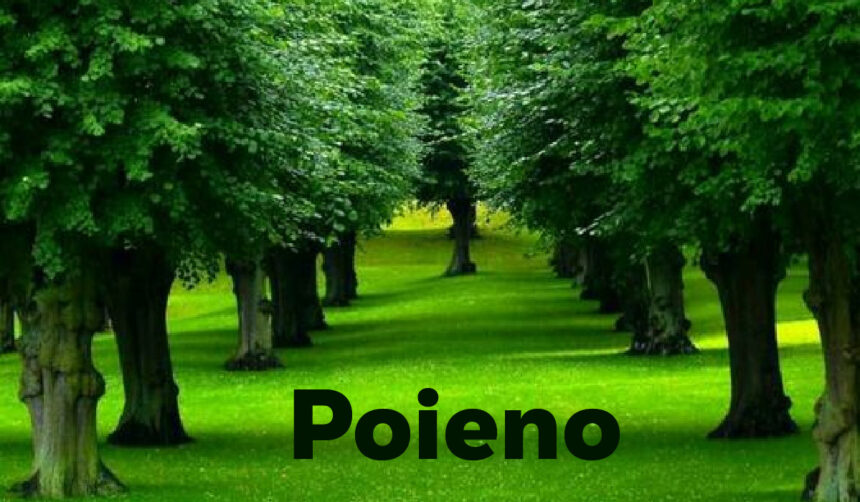
What Is Poieno?
Poieno is more than a word—it’s an evolving concept that represents creativity, transformation, and the beauty of open interpretation. Unlike traditional terms that come with rigid definitions, Poieno thrives in ambiguity. It acts as a conceptual container—flexible enough to carry meaning across disciplines like art, technology, education, branding, and psychology.
Some view Poieno as a creative philosophy, others as a branding identity, and many as a digital-cultural movement. Its rise is marked by its resonance with modern thinkers who seek freedom from structure and crave meaning through creation.
Whether it is spoken in design studios or whispered in academic forums, the essence of Poieno remains rooted in openness, evolution, and the act of becoming. In a world craving authenticity and renewal, Poieno feels like a linguistic breath of fresh air—an open meadow in the forest of complex systems.
Poieno as a Symbol of Creation
The word Poieno connects strongly to the ancient Greek root “poiein,” which means “to make” or “to create.” This root gave birth to terms like “poetry” and “poiesis,” both of which represent acts of intentional creation. When applied to Poi eno, this lineage enriches its meaning, turning it into a word that symbolizes creative energy, artistic growth, and purposeful transformation.
Poieno doesn’t just describe something—it inspires action. It reflects the timeless human drive to create something meaningful from nothing, whether it’s a product, a work of art, a new idea, or even a redefined identity. In this way, Poi eno functions not only as a word but as a tool—a reminder that creativity is not a moment, but a process of continuous renewal.
Linguistic and Etymological Roots of Poieno
The beauty of Poieno lies in its layered linguistic origins. At its heart, Poieno draws from the Romanian word “poiană,” meaning a meadow or forest clearing. This natural imagery evokes openness, peace, and space—places where light filters through dense canopies, and new growth begins.
Such meadows in Romanian culture have long symbolized healing, reflection, and gathering, making the root “poiană” deeply symbolic. The word also has resonance with the Greek “poiein” and the Italian “pieno,” which means full or complete.
Together, these linguistic strands intertwine into a symbolic idea: Poieno as “the act of creating in a space of openness to reach fulfillment.” It’s rare to find a term that simultaneously reflects nature, creativity, and wholeness—and yet Poieno does exactly that.
Poieno as a Philosophy of Becoming
Poieno is not static—it’s a philosophy rooted in the idea of becoming. At its core, Poi eno embraces the belief that creativity and identity are not fixed, but fluid. It aligns with the idea that transformation is not a disruption but an intelligent evolution.
Just as a forest meadow changes with the seasons—blooming, fading, resting—Poi eno reminds us that personal and collective growth is an ongoing journey. This concept resonates in a world where digital change, personal reinvention, and emotional resilience are daily themes.
Poieno encourages us to see identity not as a product but as a process, shaped by time, environment, and intention. It’s a mindset that values progress over perfection, possibility over limitation, and presence over performance.
Cultural Evolution and the Historical Rise of Poieno
Poieno’s journey from obscurity to cultural relevance has been gradual but meaningful. Between 2018 and 2020, the term began surfacing in startup circles and tech communities as a way to describe agile thinking and human-centric innovation.
In 2021, researchers and scholars began exploring its potential as a concept in creativity theory, linguistics, and education. By 2023–2024, digital creators, designers, and influencers had started using Poieno to represent their evolving identities and open-ended projects. And in 2025, Poieno has become a full-fledged movement—recognized for its symbolic clarity and conceptual depth.
It now appears in workshops, design frameworks, brand philosophies, and academic discussions about innovation. From a niche curiosity to a philosophy of global relevance, Poieno’s evolution is a clear reflection of a cultural shift toward openness, co-creation, and meaningful change.
Poieno in the Creative Industries
In the realm of creativity, Poieno has become a quietly powerful force. Artists and designers use it to describe a state of experimentation and flow—what some now call the “Poi eno mode.” This is the space where form meets freedom, where creativity isn’t restricted by rules but fueled by openness.
Poets use the term to explain the spark of becoming; painters have titled their collections after it to reflect the evolution of style. In zines, online exhibitions, and community projects, Poi eno acts as a thematic anchor—an invitation to explore, transform, and express.
It’s especially popular among independent creators who want to define their own terms and avoid being boxed into trends. Because Poi eno is not a fixed style, but a flexible spirit, it fits perfectly in the ever-changing world of modern art and design.
Poi eno in Technology and Innovation
In the tech world, Poieno symbolizes a shift toward human-centered innovation. It represents the idea that technology should adapt to people—not the other way around. Developers have started using Poi eno as a philosophy for UI/UX design, AI integration, and product ecosystems that prioritize simplicity and adaptability. “Poi eno mode” in AI tools means a setting that allows for intuitive creativity rather than rigid instruction.
Tech startups are even using Poieno-inspired frameworks to build co-creative platforms where users shape the product’s direction. The underlying message is clear: Poie no in tech means designing for growth, fluidity, and thoughtful human-machine collaboration. In a time where many fear automation will replace creativity, Poi eno suggests the opposite—it can enhance it, ethically and intelligently.
Poieno as a Modern Brand Identity
Poieno is a branding dream. Its sound is gentle yet memorable, international yet unique. As a name, it has appeared across industries—from Poi eno Studio (a design lab) to Poi eno Flow (a wellness brand) and Poi eno Systems (a tech startup). What makes it stand out is that it carries emotional resonance without limiting the brand to one niche. It suggests intention, space, creativity, and transformation—all powerful brand values.
Companies that embrace the Poieno philosophy tend to prioritize authenticity, user experience, and ethical growth. Rather than positioning themselves as rigid systems, they present themselves as evolving ecosystems. This is the kind of branding that resonates in 2025—a time where consumers want more than just products; they want stories, transparency, and alignment. Poi eno delivers all of that in one soft, powerful name.
Poi eno in Digital Culture and Online Identity
In today’s hyper-connected world, identity is no longer fixed—it’s shaped by platforms, interactions, and reinventions. This is where Poi eno finds new life. Many individuals are now adopting Poieno as part of their digital handle, alias, or username, using it to express fluid identity, creative freedom, and cultural awareness. On platforms like Instagram and TikTok, it’s used to label content that explores transformation, intentional living, or experimental design.
Beyond naming, Poieno is becoming a “digital vibe”—something between a moodboard, a philosophy, and an aesthetic. It represents quiet rebellion against algorithmic sameness, offering an identity that’s self-defined, thoughtful, and constantly becoming. In digital culture, where so much is loud and fleeting, Poi eno offers depth, grounding, and creative integrity.
Poieno in Education, Healthcare, and Sustainability
Poieno is not just for art and tech—it’s finding application in deeper systemic areas like education, healthcare, and manufacturing. In education, Poi eno-inspired models focus on personalized learning, exploration over memorization, and spaces where students feel safe to grow.
In healthcare, AI systems built on Poieno principles adjust to individual patients, blending data with emotional intelligence and compassionate care. In sustainability and manufacturing, Poi eno means responsive production: only creating what’s needed, reducing waste, and prioritizing ethical sourcing. Across all these fields, Poi eno stands for adaptive systems that evolve with human needs—not exploit them. It’s about returning to design that respects both the individual and the planet.
Challenges and Critiques of the Poi eno Model
Despite its strengths, Poieno is not without challenges. Its openness, while inspiring, can lead to confusion without clear application. Some critics argue that too much flexibility risks making the concept vague or difficult to implement.
Others point out that tech systems built around Poieno principles require equitable access, which is a concern in regions with low digital literacy or connectivity. Ethical risks also arise when brands co-opt Poi eno aesthetics without honoring its values—creating surface-level experiences without the underlying intent. To thrive, Poi eno must be supported by frameworks that clarify its use while keeping its spirit of openness intact. Like any good philosophy, it needs guidance without rigidity.
The Future of Poi eno
Looking ahead, Poieno is poised to become a global school of thought. As a design principle, it can influence product development, urban planning, and education reform. As a philosophy, it can shape how we think about innovation—not as disruption, but as intelligent, compassionate evolution. In policymaking, Poi eno could inform ethical AI governance, sustainable development goals, and citizen-centered public systems. “Poi eno Thinking” may soon emerge as a curriculum module in schools or a strategy in leadership training. The keyword here is synthesis—Poi eno invites multiple fields to converge around creativity, purpose, and adaptability. Its future is as wide open as the meadow it metaphorically describes.
How to Apply Poieno in Your Own Projects
Whether you’re a solo creator, business owner, educator, or technologist, you can bring Poi eno into your work. Use it as a brand name, workshop theme, or guiding principle. Try launching a “Poieno Lab” that explores open-ended problem solving. Design a “Poi eno Method” for intentional learning. Build a creative space—physical or digital—that allows for fluid collaboration. The key is not to use Poi eno as a trend, but as a tool for meaningful design. Think: is your work helping others grow, transform, or feel seen? If yes, you’re already living in the spirit of Poi eno.
Conclusion
Poieno is not just a word—it’s an invitation. To pause, to breathe, to build with intention. It reminds us that in the rush for progress, we must leave room for presence. In a noisy world of speed and shortcuts, Poi eno offers a clearing—a place to evolve, create, and connect. From its roots in nature to its role in the digital age, Poi eno continues to unfold as one of the most meaningful concepts of our time. If you’re seeking clarity, creativity, or a new way forward, Poi eno might just be the meadow you’ve been looking for.
FAQs
1. What is Poieno?
Poieno is a modern conceptual term that represents creativity, openness, and continuous growth. It does not have one fixed definition. Instead, Poieno symbolizes a space where ideas, identity, and innovation can evolve naturally. The word is commonly linked to creation, transformation, and intentional design in art, technology, and culture.
2. What does Poieno mean?
The meaning of Poieno comes from two main roots. One is the Romanian word “poiană,” meaning a meadow or forest clearing, which symbolizes openness and clarity. The other is the Greek word “poiein,” meaning “to create.” Together, Poieno means creating in an open space, both mentally and creatively.
3. Is Poieno a real word or an invented concept?
Poieno is a hybrid term. It is inspired by real linguistic roots but is used today as a modern concept rather than a traditional dictionary word. Because of this, Poieno is flexible and widely used in creative fields, branding, and digital culture without being limited to one strict definition.
4. Why is Poieno becoming popular?
Poieno is becoming popular because it reflects modern values like creativity, adaptability, and human‑centered innovation. In a fast‑changing digital world, people are drawn to ideas that allow freedom of expression and growth. Poi eno fits perfectly into art, technology, personal identity, and brand philosophy.
5. How can Poi eno be used in real life?
Poi eno can be used as a creative mindset, a brand name, or a design philosophy. Artists use it to describe creative flow, businesses use it to represent adaptable branding, and educators use it to promote open learning environments. In simple terms, Poi eno helps people build and create with intention and flexibility.
Read More: Gärningen Explained: The Powerful Meaning Behind a Single Word
For More Information, Visit Emperormagazine